1) What early experiences or influences shaped your interest in education and working with under-served students?
Before I entered education, I spent a few years working in the startup ecosystem and travelling extensively across India. Those journeys changed me. I saw extraordinary ambition and talent everywhere but I also saw how uneven the starting line is. For many young people, especially from under-served communities, ability wasn’t the constraint; access was.
Over time, one belief became clear: if India wants real social mobility and a stronger economy, we have to invest in learning, not just schooling. Education is the most powerful multiplier we have, but too often it’s not built for the realities children face, or the skills the future demands.
2) Was there a moment when you realised traditional education systems weren’t preparing students with future-ready skills?
In 2015, I joined the Teach For India Fellowship because I didn’t want to design solutions from a distance, I wanted to understand classrooms from the inside. Teaching full-time for two years was a turning point.
I saw children with incredible curiosity, resilience, and creativity. But the system around them often rewarded compliance over thinking. Students were rarely given opportunities to problem-solve, collaborate, create, or take ownership of learning skills that truly shape long-term success.
At the same time, I realised something important: while foundational literacy and numeracy are essential, they’re not sufficient. What happens after FLN? If a child can read and write but doesn’t build confidence, agency, and problem-solving ability, we’re still leaving them underprepared for life.
That gap between what children are capable of and what the system routinely develops became the spark for TAP: a practical, scalable way to build 21st century skills alongside regular schooling.
3) How did the idea for The Apprentice Project(TAP) take shape, and what were the first steps in bringing it to life?
TAP started in 2016 with a simple question: if 21st-century skills are critical, how do we build them in a way that works for government-school children at scale?
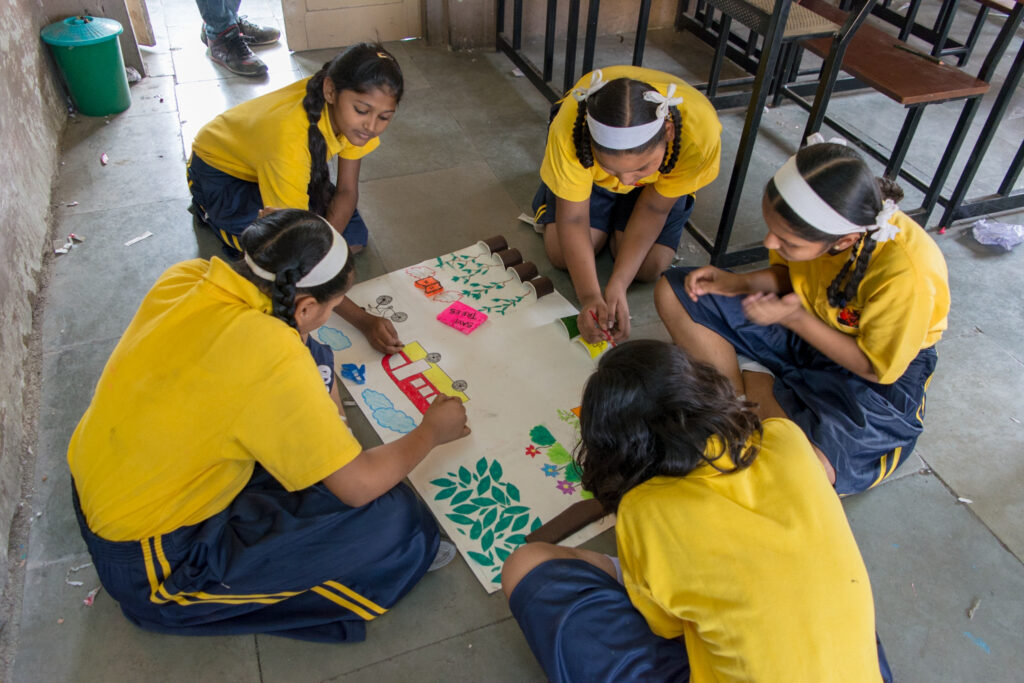
In the early years (2016–2020), we began with the most honest method – show up and learn on the ground. We worked with a small group of volunteers and facilitators, running hands-on weekend sessions with children. We tested activities, observed what truly engaged learners, and learned what was realistic for schools and communities.
Those years were intentionally “pilot-heavy”: small budgets, tight feedback loops, and constant iteration. Our aim wasn’t to grow fast, it was to understand what depth looks like. What does confidence look like in a child? How do you see creativity? How do you help a student move from passive learning to self-driven learning?
That foundation shaped TAP’s approach today: skill-building that is measurable, joyful, culturally relevant and designed to work within the constraints of the public education system, not outside it.
4) TAP Buddy is a unique AI-enabled solution. How has it evolved over time, and what key problem does it solve today
TAP Buddy began in early 2022 as a simple WhatsApp-based learning layer. The experience was largely content delivery (often PDFs and links), with doubt-solving and assessment heavily dependent on humans
Over time, we evolved TAP Buddy into an interactive, AI-enabled learning companion that can operate at population scale while still feeling personal. Today, it does three things especially well:
- Doubt-solving, instantly and safely: students can ask questions in the moment—when curiosity is high—rather than waiting for the next class.
- Adaptive support: the experience adjusts to a learner’s pace and level
- Feedback loops: students can submit work and receive structured feedback aligned to rubrics—something that is incredibly hard to deliver consistently at scale through human-only systems.
In short, TAP Buddy solves the “last-mile learning gap”: how to make high-quality practice, guidance, and encouragement available to every child, even where teacher time and resources are stretched.
5) What impact has TAP created so far, and which outcomes are you most proud of??
TAP today works with 120,000 learners directly, and through system-led adoption and partner-led rollouts, our work has influenced learning journeys for 300,000+ children overall.
But what I’m most proud of isn’t just scale, it’s what changes inside a child when they realise, “I can do this.”
We’ve seen girls experience coding or financial literacy for the first time and begin to imagine careers that previously felt out of reach. We’ve seen students who were “quiet” in class find their voice through projects and creative tasks. One student created an artwork to speak about bullying because he recognised a problem in his world and chose to act. That’s agency.
These moments matter because they signal something bigger: learning isn’t just about marks; it’s about identity. When children start thinking creatively, asking better questions, and solving problems in their communities, it changes the trajectory of what they believe is possible for their lives.
6) How does TAP ensure meaningful engagement and learning for students from diverse, under-resourced backgrounds?
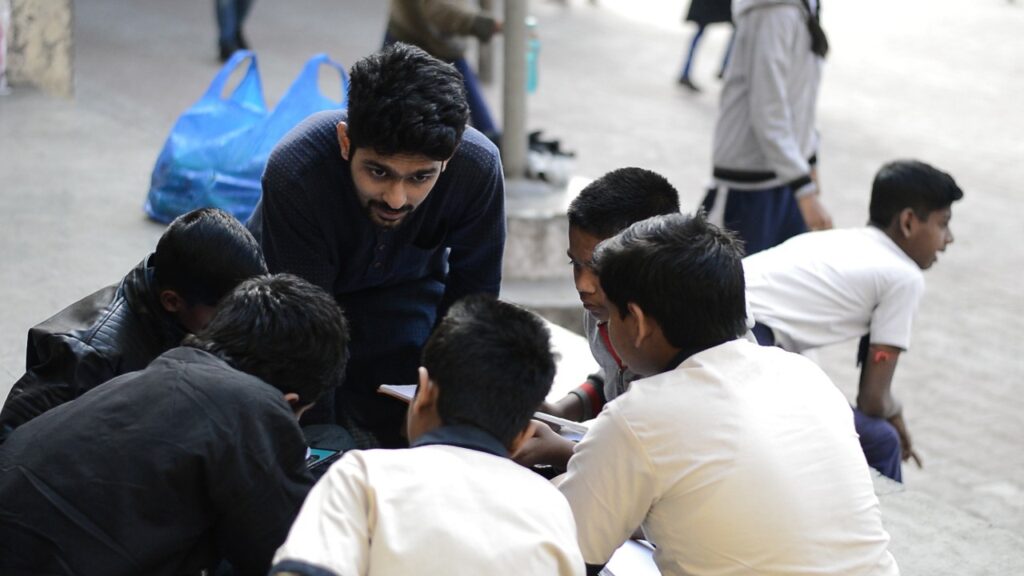
We meet children where they already are – WhatsApp, in simple, guided experiences that reduce friction. For many families, this is the most accessible digital doorway.
We build joy and momentum into learning. Skill-building can’t feel like extra homework. We use short activities, projects, and prompts that spark curiosity and reward progress so engagement comes from confidence, not pressure.
Third, we combine technology with a human-in-the-loop system. Teachers and on-ground partners play a critical role in onboarding, encouragement, showcases, and accountability. AI helps scale practice and feedback, but humans protect motivation and context.
Finally, we measure and iterate. We track participation, drop-offs, and learning signals, then refine content and nudges to support different learner needs—especially first-generation learners who may need more reassurance and structure early on.
The goal is simple: every child should feel, “This is for me,” and have enough support to keep going.
7) What has been a major challenge or setback in building TAP, and what did it teach you as a founder?
COVID-19 was a defining setback for TAP. Until then, our model leaned heavily on in-person facilitation—sessions, community engagement, and direct classroom interaction. Overnight, that entire operating system stopped.
We had two choices: pause indefinitely, or rebuild.
That period taught me something fundamental: when uncertainty hits, strategy matters but team matters more. Our team came together to reimagine how learning could continue digitally, even with limited devices and inconsistent access. We shifted from a facilitator-led approach to a tech-enabled model and eventually built what became TAP Buddy.
It wasn’t a smooth pivot. We had to learn new capabilities, redesign learning experiences, and accept that early versions wouldn’t be perfect. But we kept the core intact: children should keep learning, and learning should remain meaningful.
8) What mindsets, habits, or support systems have helped you stay resilient while building a social enterprise?
Two things keep me steady: clarity of purpose and a bias for action.
First, keeping children at the center helps us choose priorities when everything feels urgent. When we’re unsure, we return to a simple question: “What will genuinely help a child learn better ?” That becomes our north star.
Second, I believe in the “GPS mindset.” If you know where you want to go, the route can change, plans will change, but you will still get there. Building a social enterprise is exactly like that: you reroute often, but you don’t abandon the destination.
On a practical level, resilience comes from habits: listening closely to the field, reflecting honestly on what isn’t working, and building a team culture where it’s safe to iterate. And it comes from support systems—co-founders, colleagues, partners—who remind you that you’re not carrying the mission alone.
In the end, it’s simple: keep swimming, keep learning, keep moving.
9) How do you see AI transforming education in India?
AI can be the biggest accelerator of learning equity India has seen—if we use it responsibly.
For decades, education has been constrained by limited teacher time, uneven access to quality instruction, and the challenge of personalising learning in large classrooms. AI can reduce these bottlenecks by enabling three shifts:
- Personalised practice at scale: learners can get support that matches their level without waiting for scarce 1:1 attention.
- Faster feedback loops: students can learn quicker when they receive timely guidance, not just end-of-term marks.
- Wider exposure to future skills: AI can make high-quality content and skill-building (problem-solving, creativity, financial literacy, STEM) accessible beyond privileged contexts.
But the real promise isn’t replacing teachers, it’s freeing up human energy for what humans do best: motivation, mentorship, emotional safety, and building agency.
If India gets this right, AI won’t just improve learning outcomes, it will expand what children believe they can become.